
Carbohydrates: Types, Sources, and Body Response
What Are Carbohydrates?
Carbohydrates are organic compounds composed of carbon, hydrogen, and oxygen. They are one of three macronutrients (along with protein and fat) that provide energy to the body. Each gram of carbohydrate provides 4 kilocalories of energy.
Types of Carbohydrates
Carbohydrates are classified into several categories based on their molecular structure:
Simple Carbohydrates (Sugars)
Simple carbohydrates consist of one or two sugar molecules. Examples include glucose, fructose (fruit sugar), and sucrose (table sugar). These taste sweet and are absorbed relatively quickly.
Complex Carbohydrates (Starches)
Complex carbohydrates consist of longer chains of glucose molecules. Common sources include grains, legumes, and starchy vegetables. These typically take longer to digest than simple sugars.
Fibre
Fibre is a type of carbohydrate that the human digestive system cannot break down. Despite this, it plays important roles in digestive health and nutrient absorption. Fibre is discussed in more detail in separate content.
Dietary Sources of Carbohydrates
Grains
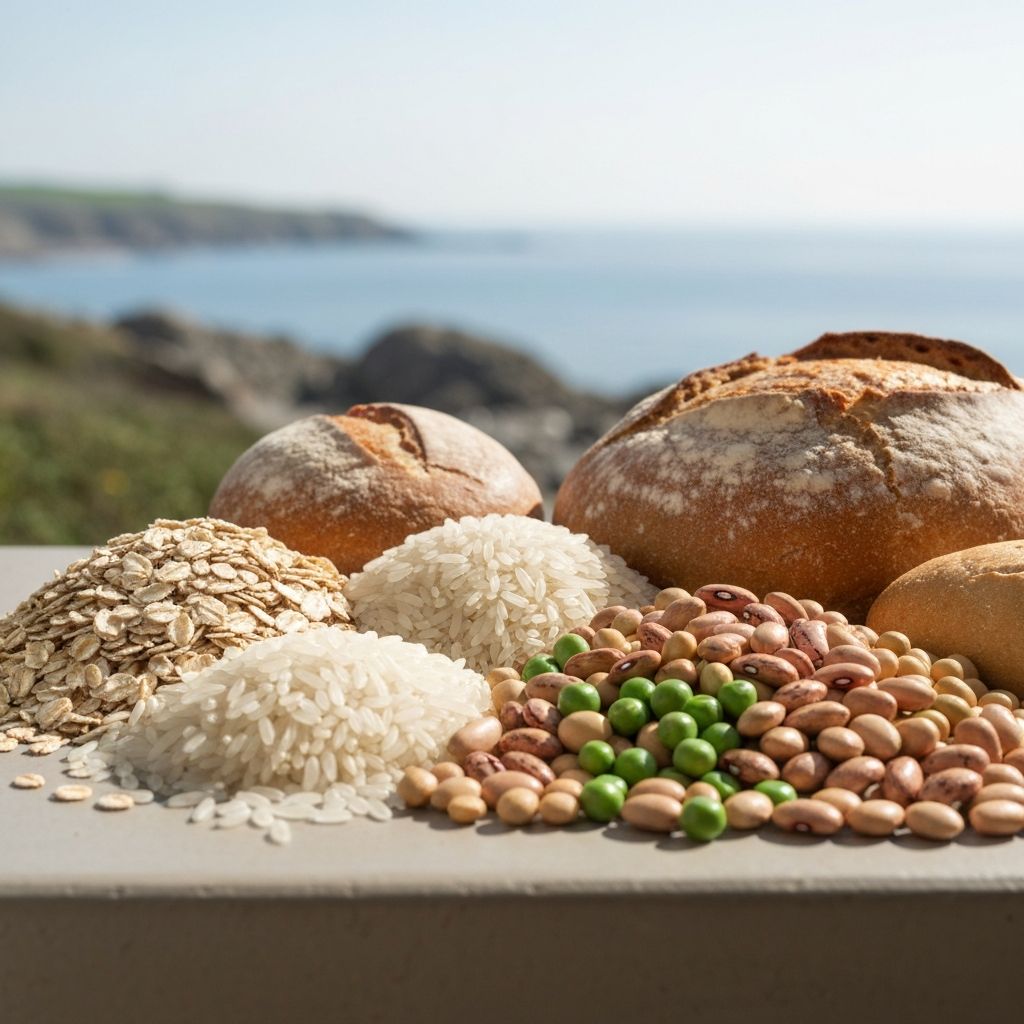
Wheat, rice, oats, barley, and other grain products contain carbohydrates in the form of starch and fibre. Whole grain versions retain more fibre than refined versions.
Legumes
Beans, lentils, and peas are sources of both carbohydrates and protein, along with significant dietary fibre.
Vegetables
Most vegetables contain carbohydrates, with amounts varying by type. Starchy vegetables like potatoes contain more carbohydrates than leafy greens.
Fruits
Fruits contain natural sugars (primarily fructose and glucose) along with fibre and other nutrients.
Dairy Products
Milk and yogurt contain lactose, a natural sugar composed of glucose and galactose.
Processed Foods
Many processed foods contain added sugars and refined grains contributing carbohydrates.
How the Body Processes Carbohydrates
When you consume carbohydrates, your digestive system breaks them down into glucose, which enters the bloodstream. This triggers an insulin response that helps cells absorb glucose for energy or storage.
Blood Glucose Response
Different carbohydrates cause different rates of blood glucose rise. Factors include fibre content, food matrix, cooking methods, and combination with other nutrients.
Glycemic Index and Glycemic Load
The glycemic index measures how quickly a carbohydrate-containing food raises blood glucose. Glycemic load also considers portion size. These concepts help explain why different carbohydrate sources affect blood glucose differently.
Carbohydrates and Energy
Carbohydrates are a primary fuel source for the brain and muscles. The body stores excess carbohydrates as glycogen in muscles and the liver, which can be used during physical activity or periods between meals.
Individual Variation in Carbohydrate Response
How individuals respond to different carbohydrate sources varies based on genetics, physical activity level, metabolic health, and other factors. This explains why different people may feel satisfied or energised by different amounts and types of carbohydrates.
Key Takeaways
- Carbohydrates are a macronutrient composed of carbon, hydrogen, and oxygen
- Simple carbohydrates are sugars; complex carbohydrates are starches
- Carbohydrate sources include grains, legumes, vegetables, fruits, and dairy products
- The body breaks down carbohydrates into glucose for energy
- Different carbohydrate sources affect blood glucose differently
- Individual responses to carbohydrate intake vary significantly
Educational Note: This article explains carbohydrate science factually without advocating for or against any particular dietary approach to carbohydrate consumption.