Breaking Down UK Nutrition Labels Step by Step
Introduction
Food labels in the United Kingdom contain standardised information designed to help consumers understand the nutritional content of packaged foods. Learning to read these labels is a practical skill for understanding dietary intake.
The Traffic Light System
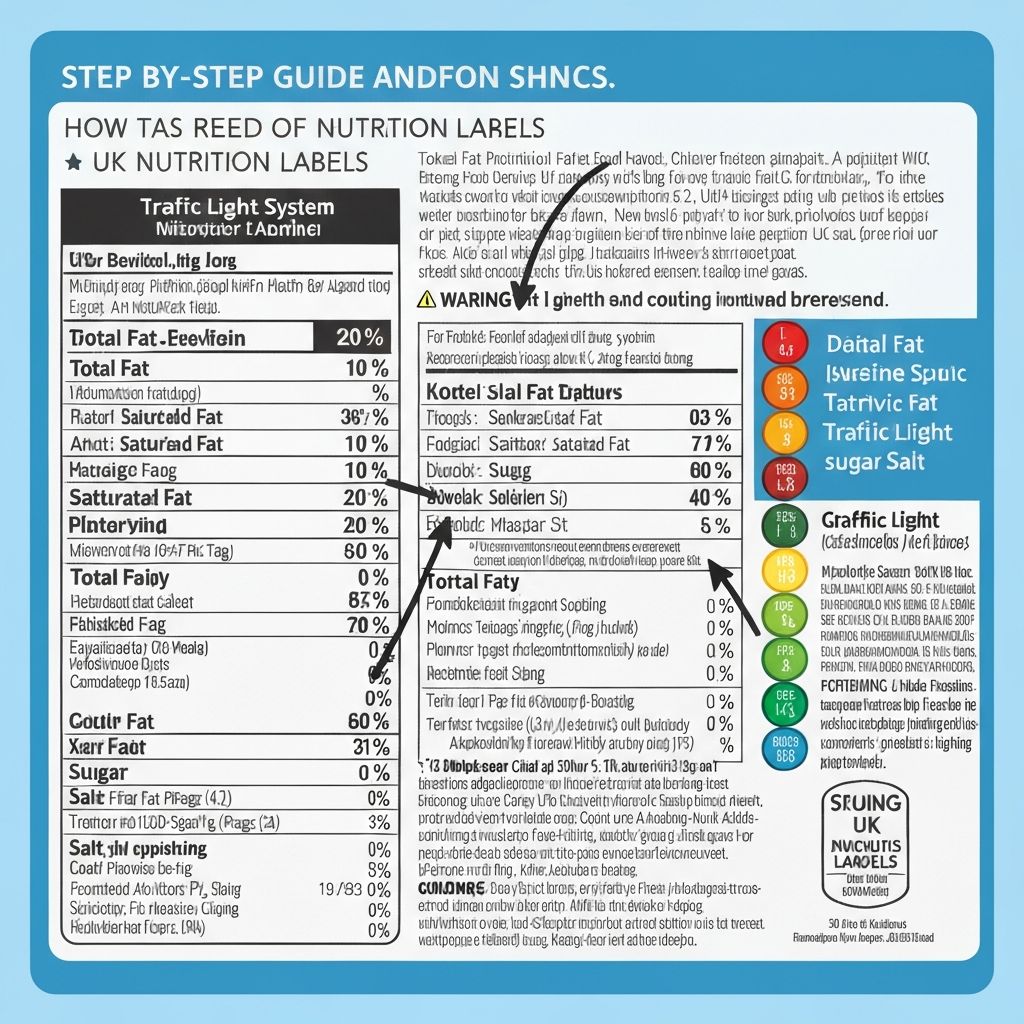
The most visible part of UK nutrition labelling is the traffic light colour system, which provides a quick visual guide to key nutrients:
Red (High)
Indicates the nutrient is present in high amounts. For fat, saturated fat, and salt, "high" means consumers are eating more of these nutrients per serving. For sugar, red indicates high sugar content.
Amber (Medium)
Indicates medium amounts of the nutrient. This is neither particularly high nor particularly low.
Green (Low)
Indicates the nutrient is present in low amounts. For most nutrients, green indicates a smaller contribution to daily intake per serving.
Key Nutrients on the Label
UK labels display information about several key nutrients per serving:
Energy
Measured in both kilocalories (kcal) and kilojoules (kJ), showing the energy content per serving.
Fat
Total fat content, often with a breakdown of saturated fat, which is listed separately due to specific UK dietary recommendations.
Carbohydrates
Total carbohydrate content, often with sugar highlighted separately, as sugar consumption is tracked distinctly.
Protein
The amount of protein per serving, important for understanding the food's role in meeting protein needs.
Salt
The sodium content expressed as salt equivalent (sodium × 2.5), relevant to understanding salt consumption.
Serving Size Matters
All nutritional information is provided per serving, not per package. Understanding the serving size is crucial—if the suggested serving is 30g but you consume 60g, you're consuming double the listed values.
The Ingredient List
Below the nutrition panel, the ingredient list shows all components of the food in descending order by weight. This helps identify specific ingredients of concern or interest.
Allergen Information
UK law requires clear labelling of 14 major allergens. This information is typically highlighted or presented separately for safety.
Storage and Use Instructions
The label includes guidance on storage conditions and recommended use-by or best-before dates.
Reference Intakes
Many labels show how much of an adult's daily reference intake (for a 2,000 kcal diet) the food provides. This gives context for the nutrient amounts listed.
How to Use Labels Effectively
- Check the serving size first
- Use the traffic light colours for quick nutrient assessment
- Compare similar products by looking at values per 100g for consistency
- Read the ingredient list for specific components
- Check for allergen warnings
- Note storage and use-by dates
Key Takeaways
- UK labels use a traffic light system for quick nutrient assessment
- Nutrition information is provided per serving, so serving size must be considered
- The ingredient list shows food components in order by weight
- Allergen information is clearly highlighted for safety
- Understanding labels helps make informed food choices based on nutrient content
Educational Note: This article explains how to interpret UK food labels. It provides factual information about label content but does not recommend specific foods or dietary patterns.